


Product prices and availability are accurate as of the date/time indicated and are subject to change. Any price and availability information displayed on Amazon site(s) at the time of purchase will apply to the purchase of this product.
|
||
| ||
|
|
|
|
|
|
| ||||||||||||||||||
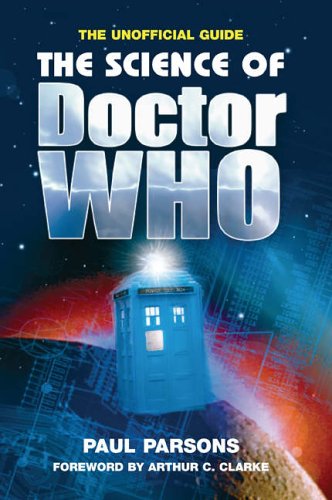
Cover blurb: ‘A voyage to the outer limits of Who universe science. Fans of the show will be amazed how much real-world science lies behind the storylines.’ ’Who fans old and new will delight in this treasure trove of ideas presented by a writer who is clearly a fan as well as being a scientist.’ ‘Paul Parsons is an amazing new talent. His achievement in using the science fiction of Doctor Who to illuminate science fact is awesome.’ ‘Entertaining, erudite and exhilarating. Captures the spirit and appeal of the perennial TV series.’ Doctor Who began in 1963. His journeys have shown us alien worlds, strange lifeforms, futuristic technology and mindbending cosmic phenomena. The breadth and imagination of the Doctor’s adventures have made the show one of science fiction’s truly monumental success stories. BBC Focus Editor Paul Parsons explains the scientific reality behind the fiction. Discover:
With style and exuberance, The Science of Doctor Who brings the very latest scientific thinking down to Earth. About the Author: Arthur C. Clarke is the visionary grandmaster of 20th and 21st century Science Fiction. In a writing career than spans seven decades he has both prophesied key, world changing technologies and written Science Fiction that has become a benchmark for the genre. | ||||||||||||||||||||||||||||||||||||||
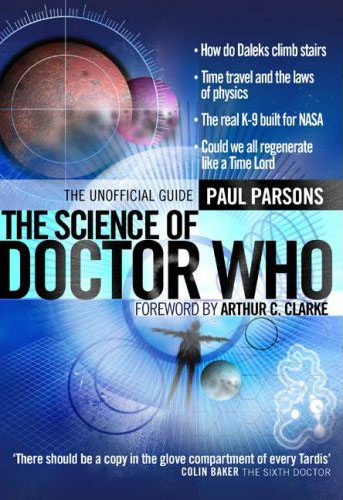
Cover blurb: ‘I enjoyed (this book) immensely. It is as instructive as it is entertaining. I suggest that you buy a copy.’ Have you ever wondered if a sonic screwdriver could really work? How Cybermen make little Cybermen? Or where the toilets are on the Tardis? Doctor Who arrived on TV screens in 1963. Since then, across light-years and through millennia, the journeys of the Time Lord have shown us alien worlds, strange life-forms, futuristic technology and mind-bending cosmic phenomena. Viewers cowered terrified of Daleks, were amazed with the wonders of time travel, and sped through black holes into other universes and new dimensions. The breadth and imagination of the Doctor’s adventures have made the show one of science fiction’s truly monumental success stories. BBC Focus editor Paul Parsons explains the scientific reality behind the fiction. | ||||||||||||||||||||||||||||||||||||||
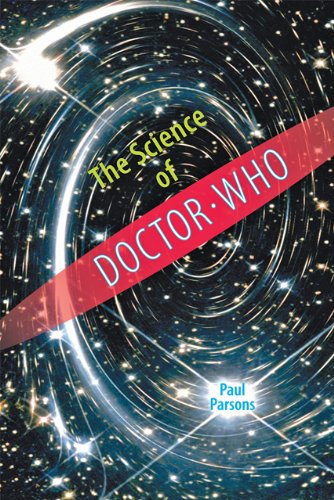
Cover blurb: “Parsons deftly weaves a fascinating mixture of known fact, possible future development, and scant possibilities from the Who universe into an investigation that will appeal to Who fans and general readers alike. There should be a copy in the glove compartment of every Tardis.” — Colin Baker, the Sixth Doctor “A voyage to the outer limits of Who universe science. Fans of the show will be amazed how much real-world science lies behind the storylines.” — Stephen Baxter, author of Transcendent Almost fifty years after he first crossed the small screen, Doctor Who remains a science fiction touchstone. His exploits are thrilling, his world is mind-boggling, and that time travel machine — known as the Tardis — is almost certainly an old-fashioned blue police box, once commonly found in London. Paul Parsons’s plain-English account of the real science behind the fantastic universe portrayed in the Doctor Who television series provides answers to such burning questions as whether a sonic screwdriver is any use for putting up a shelf, how Cybermen make little Cybermen, where the toilets are in the Tardis, and much more. Taking the show as a starting point — episode-by-episode in some cases — Parsons dissects its scientific concepts. In addition to explaining why time travel is possible and just how that blue police box works, Parsons discusses:
This slender, equation-free discussion is penned by a Ph.D. cosmologist and is ideal beach reading for anyone who loves science and watches the show — no matter which planet the beach is on. This edition has been thoroughly revised and re-edited, and also contains a new chapter discussing elements on the latest TV series, starring Matt Smith. | ||||||||||||||||||||||||||||||||||||||
 |  |  |
 | Go back | |
| | |


